Technology
Robust combustion. Controlled emissions. Useful energy.

Why rotary kiln?
Rotary kilns are robust for diverse, difficult wastes (including high-chlorine or acidic streams) because they provide excellent mixing, controlled residence time and stable combustion conditions – enabling high destruction efficiencies with integrated flue-gas cleaning.
How it works
Process summary
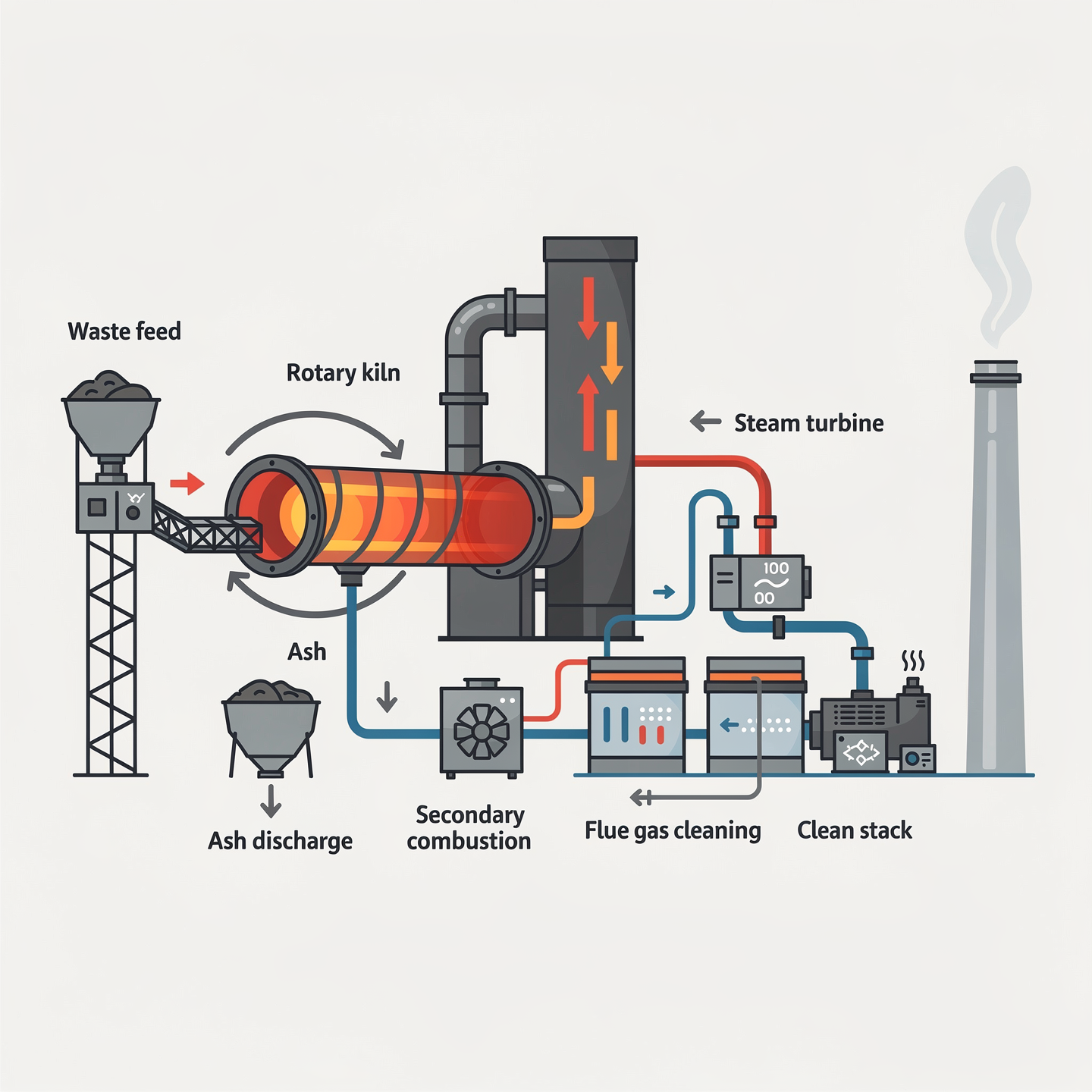
- Receipt & segregation – secure transfer, quarantine, and acceptance checks; barcode traceability and load tracking
- Feed & primary combustion (rotary kiln) – waste is charged to a rotating kiln that provides mixing and residence time to ensure complete combustion of solids and liquids
- Secondary combustion & residence – combustion gases pass to a secondary chamber (afterburner) ensuring required temperatures and residence times for destruction of organics
- Flue gas cleaning – multi-stage cleaning (e.g., sorbent injection, ceramic filters, De-NOx units) to meet permit limits; MCERTS continuous monitoring for key pollutants
- Energy recovery – heat exchangers recover thermal energy as steam for on-site use and for power generation to meet on-site demand and grid injection
- Residuals handling – bottom ash and residues are tested, treated and disposed/recovered in accordance with regulatory guidance
Technical highlights
1.
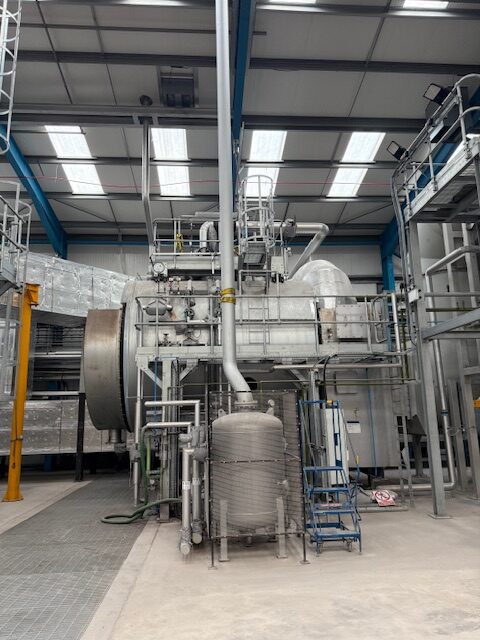
Rotary kiln for thermal stability and robust operation
2.
Automatic feeding, bin scanning & throughput tracking for operational control and traceability
3.
Fully automated emissions logging (24/7 CEMS) and compliance reporting
FAQs
Is incineration safe?
When designed and operated to permit standards – with modern rotary kilns, secondary combustion and multi-stage flue-gas abatement plus continuous monitoring – incineration achieves secure destruction and low emissions. Independent monitoring and permitting form the backbone of safety and compliance.
Do you recover energy?
Yes – our systems can recover heat as steam which is used to generate electricity for onsite use and grid injection.
What wastes can you take?
Clinical, infectious, pharmaceutical and many hazardous specialist industrial wastes – each waste stream is assessed and accepted under permit conditions; some wastes require bespoke pre-treatment.
How do you manage ash and residues?
Bottom ash and APC residues are tested, classified and disposed of or recovered in accordance with EA guidance and the waste hierarchy.